
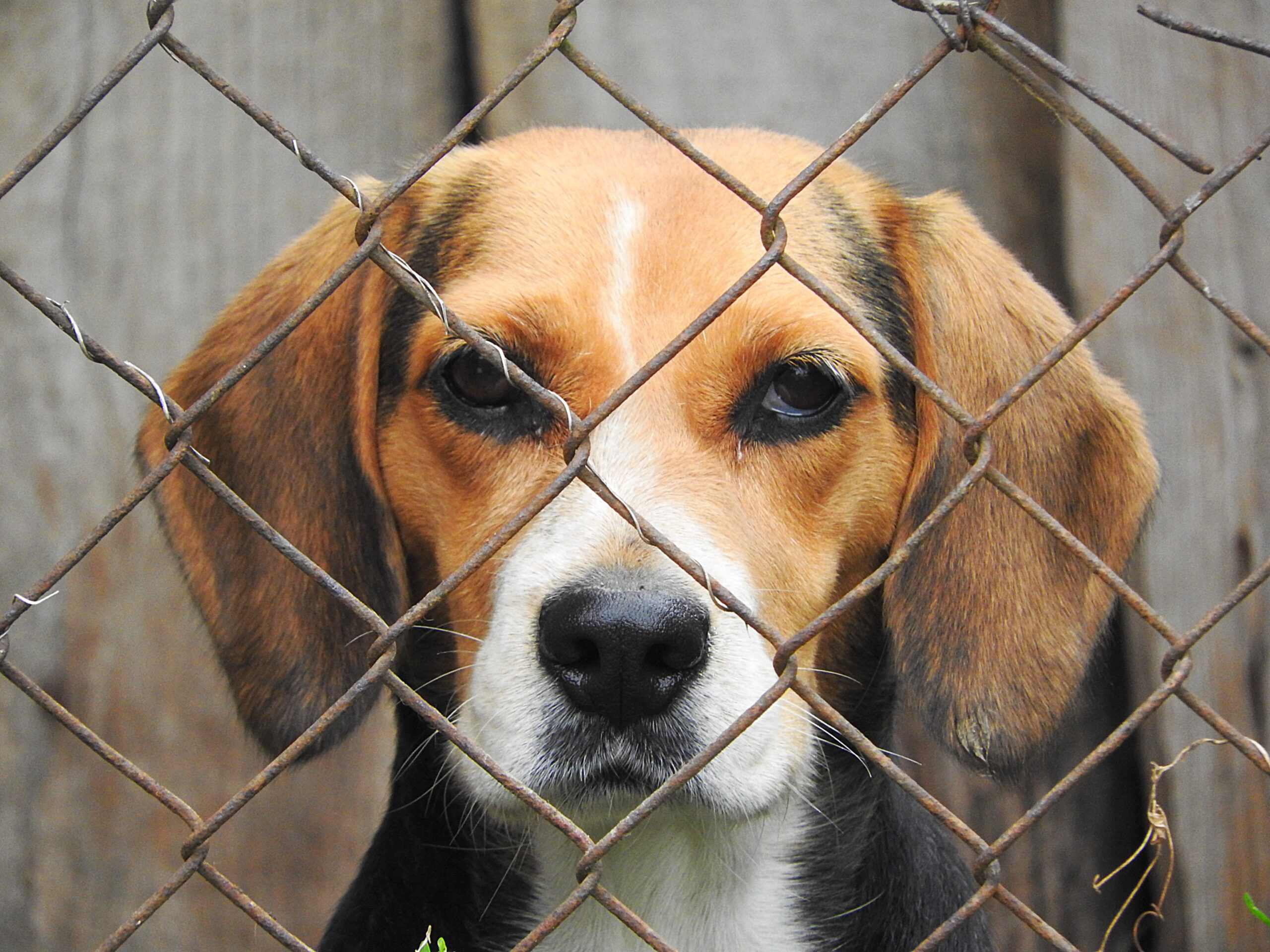
United States – The U.S. Food and Drug Administration (FDA) has indicated that work is underway to shift from animal testing to Ai assisted computational modeling. Which means dogs, bunnies, chimpanzees, and more will be used MUCH less frequently in drug testing.
In a recent interview, FDA Commissioner Marty Makary announced plans to move away from what he described as “unnecessary testing” on animals, pointing instead to rapidly advancing technologies that may replace traditional methods.
“We’re going to use computational modeling, where AI can look at a molecule and predict if it’s going to be toxic,” Makary explained. “We’re using organ-on-a-chip technology, which means you grow cell lines in a lab and apply the drug in the laboratory.”
These alternatives, ranging from artificial intelligence to lab-grown human tissue models, are designed to better predict how drugs will behave in the human body. According to Makary, that could significantly reduce reliance on animals such as mice, rabbits, and even primates.
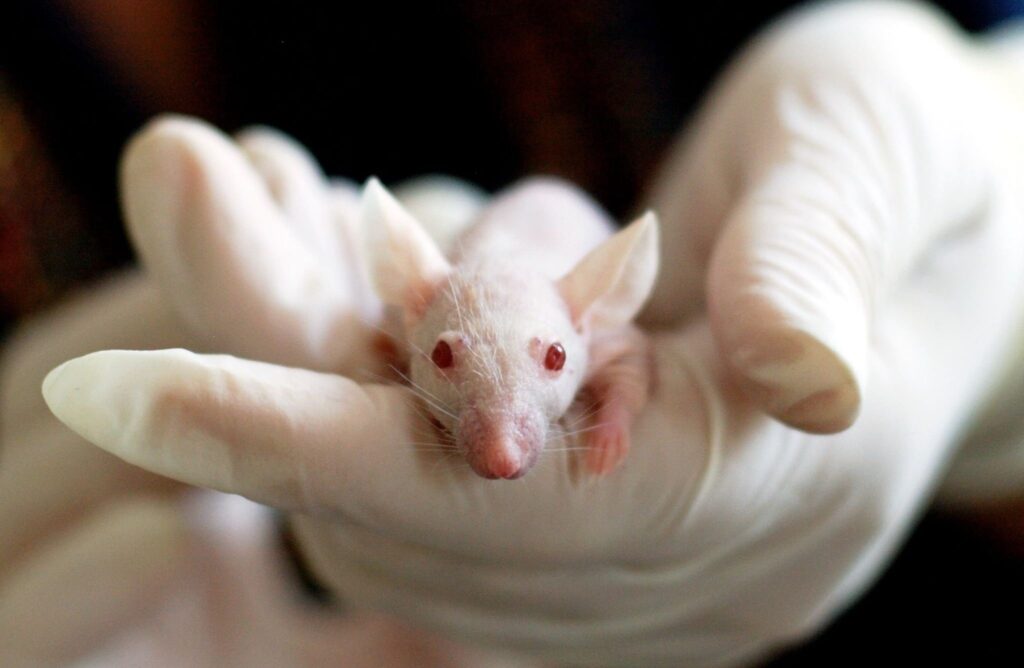
“All of this means we’re not going to need the chimpanzees and bunny rabbits and all of these animals with nearly the frequency,” he said.
For decades, animal testing has been a standard part of drug development. But critics have long argued that animal models often fail to accurately predict human outcomes. Makary echoed that concern, noting that animal testing is not as reliable as many assume.
“It turns out animal models are just not good models to test toxicity in humans,” he said. “Mice are not the same as human beings. They’re not the same, and 90% of drugs that pass animal testing do not pass in humans in terms of safety and efficacy.”
That statistic has been cited in multiple studies and has fueled growing interest in more human-relevant testing methods.
The FDA’s announcement aligns with a broader trend in science and regulation. In recent years, federal agencies have increasingly supported alternatives such as, AI-driven drug modeling, Organ-on-a-chip systems that mimic human organs, and Advanced cell cultures using human tissue. These methods are often faster, more cost-effective, and potentially more accurate than traditional animal testing.
If implemented widely, the shift could spare large numbers of animals from laboratory use while also speeding up the drug development process. Faster, more efficient testing ultimately benefits consumers as well. By shortening research and development timelines, pharmaceutical companies may be able to bring new treatments to market more quickly, and at lower cost.
While the announcement marks a significant step, experts caution that animal testing will not disappear overnight. Regulatory frameworks, industry practices, and scientific validation of new methods all take time to evolve.
Still, the FDA’s direction is clear. The future will include fewer animals being used in testing as new technologies take their place.
independent investigations and reporting.


10 Comments
The FDA has failed once again due to their lies. Ridglan Farms and the 2,000 beagles still waiting rescue and the authorities hitting the rescuers with gas and pellets is assault and shows they are not serious. The abuse at Ridglan Farms is beyond anything anyone can imagine. We the consumers can help on our end by NEVER purchasing ANYTHING tested on animals. Start reading labels and stay away completely from companies like Unilever, Johnson & Johnson, Roundup, and many others — I could go on for days. Download the app Cruelty Cutter and start your life guilt free by using products that do not test on animals. look for the leaping bunny sign. Just saying the words “Not tested on animals” is misleading and may be fraud. Do you research. Our dollars speak volumes.
« Science sans conscience n’est que ruine de l’âme. »
Except that vivisection cannot even be caIIed “science.” Not even cIose.
Animals shouldn’t be used at all! Plain and simple! Get it, got it, good!! You dumb SOBs!!
👍🏻👍🏻👍🏻👍🏻 agree with you 100%, Peggy💞
Per the article “Still, the FDA’s direction is clear. The future will include fewer animals being used in testing as new technologies take their place.” How about none at all??? Humans are the cruelest animals on the planet. AND why do some so-called humans think that they are far superior to animals??
I have been hearing this for years now. I don’t believe it anymore. There is too much $$$ involved. ACTIONS SPEAK LOUDER THAN ALL THESE BROKEN PROMISES. END TESTING NOW.
They’re not going to need animals all that much any more? When was there a need for sadism and total fraud and corruption in medical research? Never. But at least these are steps in the right direction. Now watch, if Trump’s FDA manages to put an end to fraudulently/sadistically using animals, if the majority of voters are stupid enough to put democrats back in dominance at the mid-term and if a democrat manages to win the presidency in 2028, they will do away with this progress and bolster up vivisectors once again. It’s what they do. Just like when Biden’s EPA canceled the Trump-era 2035 deadline for eliminating animal testing.
Experiments on animals cannot be extrapolated to humans because of differences in physiology, metabolism, genetics, biochemistry, diet, and environment. It is not science. It doesn’t work. It doesn’t bring about cures. It only continues because it is a billion dollar a year industry to everyone involved. Taxpayers should not be paying for any of this cruelty and fraud perpetrated on any animal. All of it should be abolished.
Vivisection is fraud , period.
When the first printing of “SIaughter of The Innocent” by Hans Ruesch. reached bookstores in 1978, the MedicaI Mafia sent squads to confiscate aII copies from the bookstores and destroy them, and they did.
The reason for this was it contained documentation from the Iaboratories tha vivisectors’ sadistic dabblings are compIete fraud. A mouse is no more a human than is a dog or a bunny, pIus the artificial settings do not match organically deveIoped diseases, etc, Their admissions couId not be aIIowed to be seen pubIicIy.
Mr. Ruesch did not give up, and seIf pubIished a second printing. – then foIIowed by two more books – but none carried by mainstream bookstores. The site kindness and science in action. has copies of the second edition, or you can visit the website for information about the fraud of vivisection.
OR visit Mr. Ruesch’s original site ,CIVIS, and The International Congress of Doctors Against Vivisection. Some browsers stiII won’t take you there. But keep trying – others wiII.